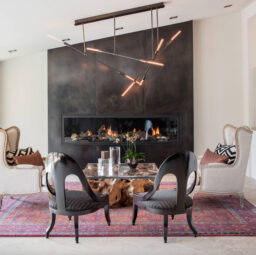

Learning how to style oriental rugs in modern homes is easier than most homeowners expect. The trick isn’t matching every color in the rug to your furniture — it’s choosing one anchor tone, sizing the rug correctly for the room, and letting the pattern contrast intentionally with clean-lined, contemporary pieces. Done right, an antique or hand-knotted rug becomes the focal point that ties a minimalist living room, bedroom, or entryway together.
To style oriental rugs in modern homes, pick a rug with one dominant color that echoes an existing accent in the room, size it so furniture legs rest on or near the rug’s edge, and pair it with simple, solid-colored furniture to let the pattern stand out. This mix of old-world craftsmanship and clean modern lines is one of the most popular interior design pairings today.
Key Takeaways
- Contrast is the design principle that works best: ornate rug, simple furniture.
- Rug size should extend at least under the front legs of major seating pieces.
- One dominant rug color should repeat somewhere else in the room — pillows, art, or a throw.
- Layering a smaller antique rug over a jute or sisal base rug is a current, widely used design technique.
- Local interior designers in the Bay Area increasingly pair Persian and Turkish rugs with mid-century and Craftsman-style homes.
Why Do Oriental Rugs Work in Modern Interiors?
Modern interiors tend to favor neutral palettes, straight lines, and minimal ornamentation. An oriental rug introduces texture, color depth, and history into that simplicity without overwhelming it — as long as the rest of the room stays restrained. Interior designers often refer to this as “the one statement piece rule”: when a room has one clearly ornate element, like a hand-knotted Heriz or Oushak rug, everything else should support rather than compete with it.
This pairing has grown especially popular in homes with hardwood or polished concrete flooring, common in newer Bay Area construction, where a rug adds warmth that the flooring alone doesn’t provide.
Antique Rug Interior Design Ideas by Room
Oriental Rug Living Room Decor
In the living room, the rug typically anchors the seating arrangement. A widely used design rule is to select a rug large enough that the front legs of your sofa and chairs sit on top of it, which visually unifies the furniture grouping instead of making the rug look like an isolated mat. Deep reds, indigo blues, or camel tones in an antique Persian rug pair especially well with neutral linen or boucle sofas, since the solid fabric lets the rug’s pattern read clearly.
Antique Rug Bedroom Styling
Bedrooms benefit from softer, smaller-scale patterns. A common approach is placing the rug so it extends about 18–24 inches beyond each side of the bed, so bare feet land on the rug when stepping out. Runner-style antique rugs on either side of the bed are another practical option in smaller Bay Area bedrooms, especially in older Palo Alto homes with compact floor plans.
Oriental Rug Entryway Ideas
Entryways are one of the easiest places to introduce an oriental rug without a big commitment. A smaller antique or vintage rug, roughly 3×5 feet, adds immediate warmth and helps define the entry as its own space, particularly in open-concept homes where the front door leads directly into a living area.
How Do You Match Oriental Rug Colors With Modern Furniture?
Color matching doesn’t mean finding an exact match — it means finding one repeating tone. Here’s a simple, step-by-step approach designers commonly use:
- Identify the rug’s dominant background color (often red, navy, ivory, or terracotta in antique Persian and Turkish rugs).
- Pull one secondary color from the rug’s pattern — this becomes your accent color for pillows or art.
- Keep large furniture pieces (sofas, sectionals) in solid, neutral tones so they don’t visually compete with the rug.
- Introduce metals or wood tones that appear naturally in the rug’s fringe or border coloring.
- Test under both daylight and evening lighting, since antique dye tones can shift noticeably under warm bulb lighting.
Layering Oriental Rugs: A Growing Trend
Layering — placing a smaller antique or oriental rug on top of a larger neutral base rug like jute, sisal, or a plain wool weave — has become one of the most requested looks in contemporary interior design. This technique adds texture without covering an entire floor in pattern, and it’s particularly useful for protecting a valuable antique rug from heavy foot traffic by keeping it in a lower-traffic zone of the room, such as under a coffee table rather than a main walkway.
Oriental Rug Size Guide for Rooms
| Room | Recommended Rug Size | Placement Tip |
| Living Room | 8×10 or 9×12 ft | Front legs of furniture on the rug |
| Bedroom | 6×9 ft or two 2×3 runners | Extend 18–24 in past bed edges |
| Entryway | 3×5 ft | Centered under the front door sightline |
| Dining Room | Table size + 24–30 in on all sides | Chairs stay on rug when pulled out |
| Home Office | 5×8 ft | Desk and chair fully contained on rug |
Mixing Antique Rugs With Contemporary Furniture
The most common styling mistake is pairing an ornate antique rug with equally busy furniture, art, and drapery — the result feels cluttered rather than curated. Designers recommend choosing no more than two patterned elements in a room; if the rug is one, the second could be a single accent pillow or piece of art, with everything else kept solid and simple. Clean-lined furniture, such as a mid-century sofa or a minimalist console table, allows the rug’s craftsmanship to remain the visual centerpiece rather than getting lost among competing patterns.
Bohemian Oriental Rug Decor
For a more layered, bohemian look, oriental rugs pair well with mixed textures rattan furniture, macrame wall hangings, and warm wood tones. This style leans into more visual richness overall, but even in bohemian rooms, designers typically keep wall colors neutral so the rug and textiles carry the color story.
Styling Oriental Rugs Near Palo Alto and the Bay Area
Homeowners searching for styling oriental rugs Palo Alto guidance often have specific housing styles in mind — Eichler homes, Craftsman bungalows, and newer contemporary builds all call for slightly different approaches. In Eichler-style homes common throughout Palo Alto and nearby Sunnyvale, exposed wood beams and clean geometric lines pair well with mid-toned antique rugs that don’t compete with the home’s original architecture.
In Menlo Park and Atherton, larger living rooms with higher ceilings often accommodate bolder, larger-format rugs like an antique Serapi or Heriz. In more compact San Francisco apartments and Mountain View condos, a well-placed runner or a mid-size 5×8 rug tends to work better than an oversized piece that overwhelms the room.
Local interior designers and rug specialists across Redwood City, Los Altos, and the broader Peninsula frequently recommend an in-home consultation before purchasing an antique rug, since natural light exposure, flooring tone, and room dimensions vary significantly even between homes on the same block.
Frequently Asked Questions
What size oriental rug works best under a sofa? For most living rooms, an 8×10 or 9×12 foot rug allows the front legs of the sofa and chairs to sit on the rug, which visually anchors the seating area. Smaller rugs placed only in front of furniture tend to make the room feel disconnected.
Can oriental rugs work in a minimalist or Scandinavian-style home? Yes. A single antique rug with a muted color palette, such as ivory and soft blue, can add warmth to a minimalist space without disrupting its clean aesthetic. The key is limiting other patterns in the room.
Should I layer a rug over carpet? It’s possible, but it works best over low-pile carpet. Thick carpet can make the layered rug shift or bunch, so a rug pad designed for carpet-on-carpet use is recommended for stability.
How do I keep an antique rug from sliding on hardwood floors? A non-slip rug pad specifically rated for hardwood flooring prevents sliding and also protects the wood finish underneath. This is especially important in high-traffic rooms like entryways and living rooms.
Do oriental rugs work with modern furniture, or only traditional pieces? Oriental rugs pair well with modern furniture specifically because of the contrast — a hand-knotted, patterned rug alongside simple, solid-colored contemporary pieces is one of the most widely used design pairings in current interior styling.
What’s the difference between a runner and an area rug for styling purposes? Runners are narrow rugs typically used in hallways, entryways, or alongside beds, while area rugs are sized to anchor a full seating or furniture arrangement. Both can use the same antique weaving traditions, just in different dimensions.
Finally
Knowing how to style oriental rugs in modern homes comes down to a few consistent principles: choose the right size for the room, let one dominant rug color repeat elsewhere in the space, and keep surrounding furniture simple so the rug’s craftsmanship stands out. Whether you’re working with an Eichler home in Palo Alto, a condo in Mountain View, or a larger property in Menlo Park, a well-placed antique or oriental rug can transform a modern room without a full renovation. If you’d like personalized guidance, reach out to a local rug specialist for an in-home styling consultation.